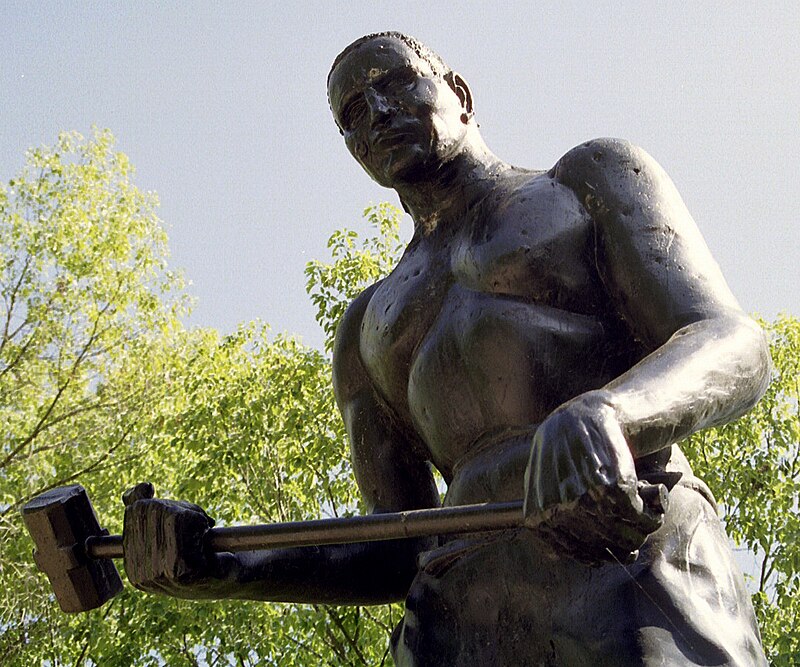
This is a stretch, but I have esteemed myself something of a John Henry this semester in my internship project for the Florida Historical Quarterly. Largely duplicating the efforts of an earlier digital humanities project, I have meticulously-logged all 1,794 FHQ articles from the first volume in 1908 to the most recent third issue of volume 95. Why? Two reasons. 1) I wanted to perform a close survey of all 95 volumes, to get something of an intimate feel for the first century of the Quarterly, and 2) I do not yet trust optical character recognition (OCR). It does fine more than 90% of the time, but somewhere between 1 in 10 and 1 in 20 words get garbled, and for me, that still has the human winning the race.
So now I have an index, in chronological order, of some 1,800 featured articles (excluding all the book reviews), and now I have to figure out a meaningful mode of analysis, and on the double. I know I want to categorize them, and have the flexibility to acknowledge overlapping categories, e.g., Native Americans, economics, Seminoles opening a casino is both. My problem is figuring out what categories to go with, because once I start, I don't want to get to article 650 and realize I should have been tagging articles of x type. To a great extent this is a crystallization of the whole historical project: you analyze a topic in history, anxious not to miss something, but you have to remind yourself that a solid contribution is a far more realistic and likely worthy goal than the definitive, fully-exhaustive treatment. We will always miss angles of analysis, and all to the good; it gives our colleagues and posterity something to do with their scholarship. Now, time to get back to driving these spikes...

No comments:
Post a Comment